In development

Cat 'Em Up

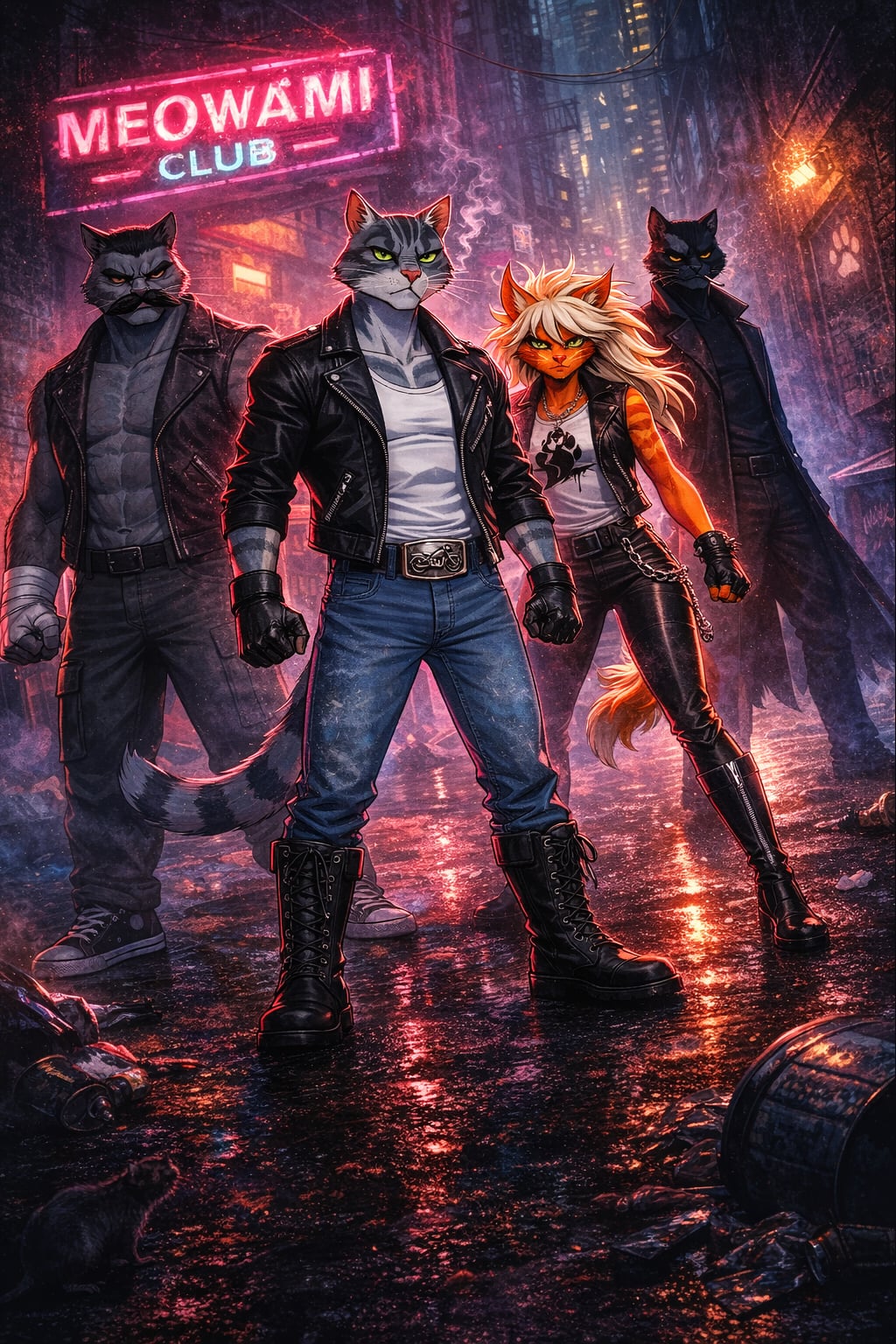
Cat ’Em Up is a high-energy retro 80s neon beat ’em up. Inspired by arcade cabinets, leather jackets and raw disco-rock energy, the game delivers pure side-scrolling street chaos with a feline hero at the center of the fight.

Cat 'Em Up

Overview


Project Summary

Cat 'Em Up is a retro 80s-inspired beat 'em up built around a strictly separated, deterministic game core.

The project is designed as both a playable arcade experience and a showcase of clean, engine-agnostic architecture.


Core Idea

The system is structured around a single authoritative simulation layer:

Rendering and audio are fully decoupled from gameplay logic.


Scope

This project intentionally focuses on a controlled feature set:

No feature creep. No engine coupling inside Core.


Architectural Goals


Target Outcome

The final result should demonstrate:

World - Meowami City


Meowami City

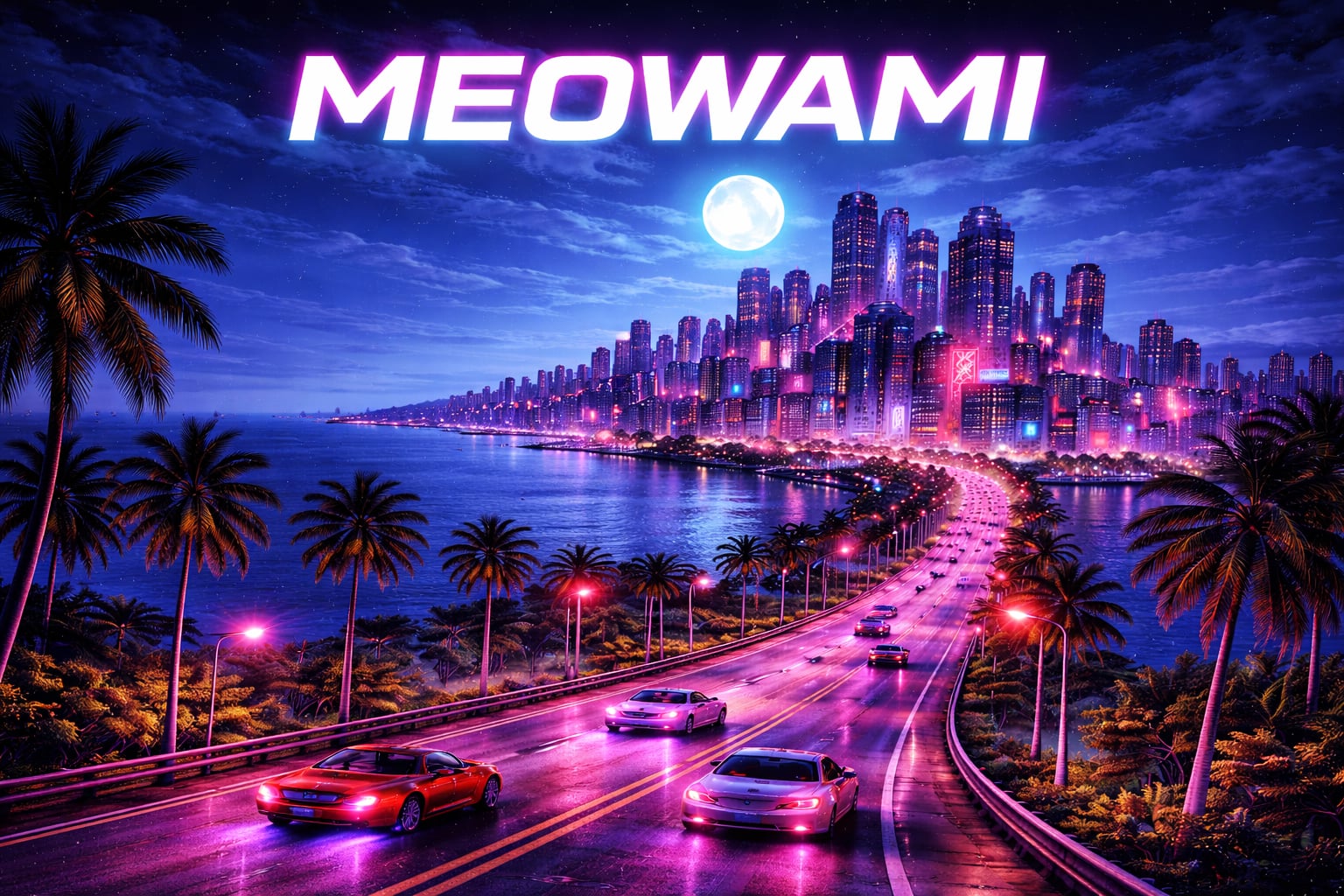
Meowami City is a neon-soaked coastal metropolis built by cats — and slowly consumed by corruption.

Once a glittering entertainment capital, the city has decayed into a layered battlefield of gangs, political control and crumbling glamour. Night never truly ends here — it only shifts from electric pink to cold blue.

Violence is not chaos.
It is structure.
It is territory.
It is identity.

Syndicates compete.
Police enforce selectively.
Citizens endure.


Tone


City Identity

The city should feel alive — but indifferent.


Power Structure

🐖 The Pigs — Authority & Organized Crime

The pigs control the upper layers of Meowami.

They do not patrol streets.
They issue orders.

Publicly: businessmen and officials.
Privately: crime lords.

They see the city as property.


🐀 The Rats — Street Gangs

The rats dominate the lower layers.

They are fast, aggressive, territorial.

They do not seek governance.
They seek control of blocks.


🐕‍🦺 The Hounds — Police

The hounds represent law — but not justice.

Some still believe in order.
Most protect the system.

They suppress noise.
They do not fix rot.


Conflict

Pigs and rats compete constantly:

Their war reshapes neighborhoods.

But for ordinary citizens, nothing improves.

Prices rise.
Businesses close.
Streets grow dangerous.

War between predators does not create peace.


Narrative Position

Four cats refuse to accept decay.

They are not heroes of the system.
They are not aligned with pigs, rats or dogs.

They fight for:

They are not saving Meowami.

They are taking it back — one block at a time.


Future Expansion

This document will later define:


Characters

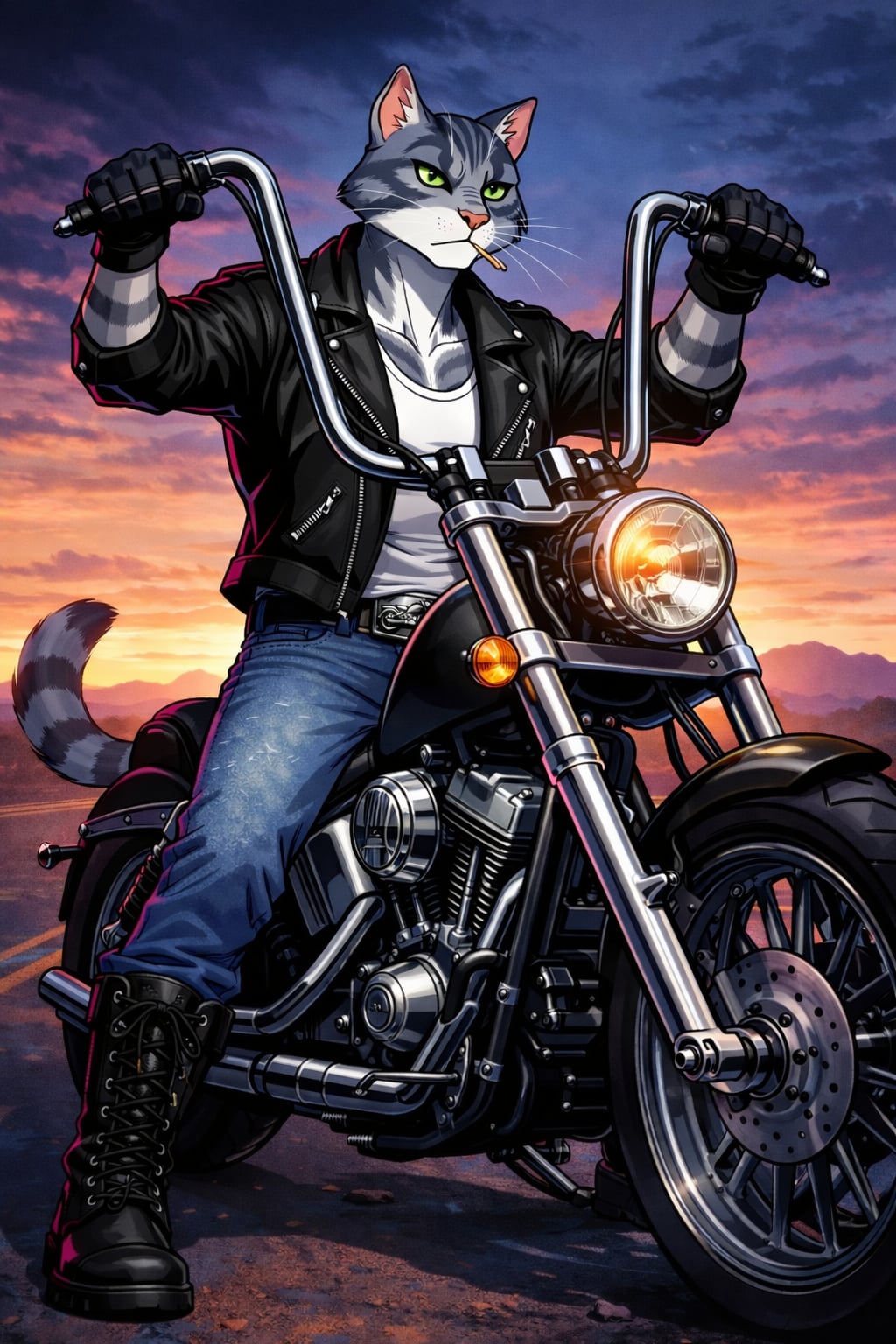
THE LEADER — Timmy


Core Identity

Name: Timmy
Role: Team Leader
Archetype: Balanced / Control
Occupation: Motorcycle Mechanic
Motto: Live to Claw — Claw to Live

Timmy is the stabilizing force of the team — the calm center around which chaos organizes itself.

He is not the strongest.
Not the fastest.
He is the most reliable.


Canon Reference

All immutable visual rules are defined here:

This document defines who Timmy is, not how he must be drawn.


Narrative Role

Timmy functions as the natural leader of the group.

He does not dominate through aggression or volume.
Authority comes from composure, clarity, and control.

Others escalate situations.
Timmy ends them.

He represents balance between instinct and discipline.


Archetype

Balanced / Control Fighter

Design philosophy:

  • Tactical spacing
  • Efficient movement
  • Clean execution
  • Situational awareness
  • Precision over brutality

Timmy controls the rhythm of combat rather than overpowering opponents.


Personality

  • Speaks little, but with intent
  • Calm under pressure
  • Light irony, never comedic
  • Observant before acting
  • Confident without arrogance
  • Emotionally grounded

He never rushes.

When Timmy moves, it matters.


Presence

Timmy carries quiet authority.

He feels:

  • Controlled
  • Reliable
  • Focused
  • Dangerous without theatrics

The team naturally aligns around him.

He stabilizes chaos.


Symbolism

Timmy embodies classic street-hero mythology:

  • Independence
  • Personal code of honor
  • Rider mentality
  • Loyalty through action, not words

Motorcycle symbolism reinforces freedom, movement, and controlled danger.


Combat Identity

Timmy’s combat style reflects leadership through precision.

Characteristics:

  • Clean, efficient strikes
  • Smooth combo transitions
  • Balanced speed and power
  • Tactical positioning
  • Controlled aggression
  • Precise claw finishers

Every action appears intentional.

No wasted motion.


Emotional Tone

Timmy represents the moment before impact.

Calm.
Measured.
Certain.

He does not chase conflict —
he resolves it.


Design Intent (High-Level)

Timmy should always read as:

  • A grounded 80s arcade street hero
  • A biker, not a soldier
  • A leader, not a brute
  • Serious without grimdark exaggeration

Detailed visual enforcement is handled exclusively by the Visual Lock document.
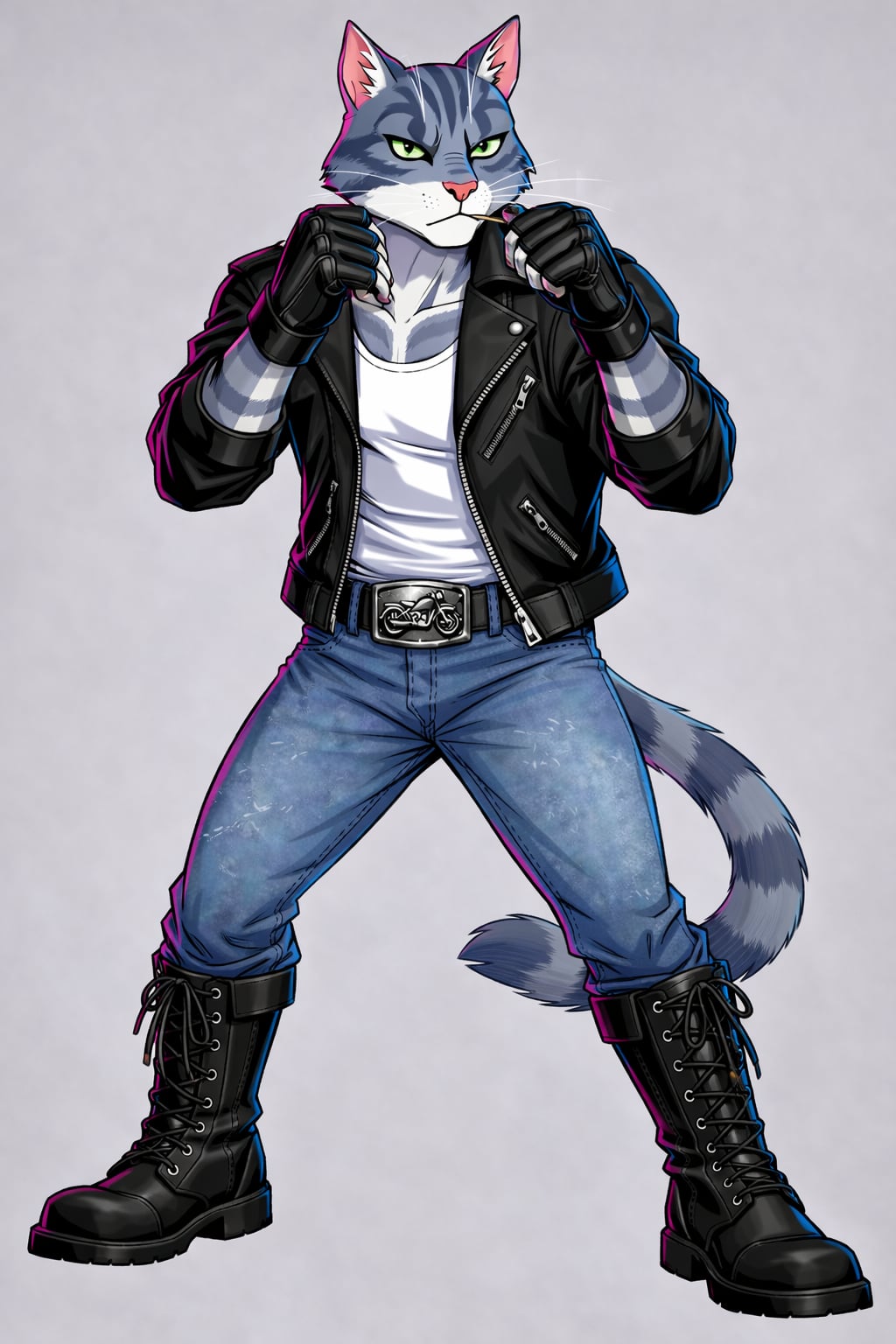

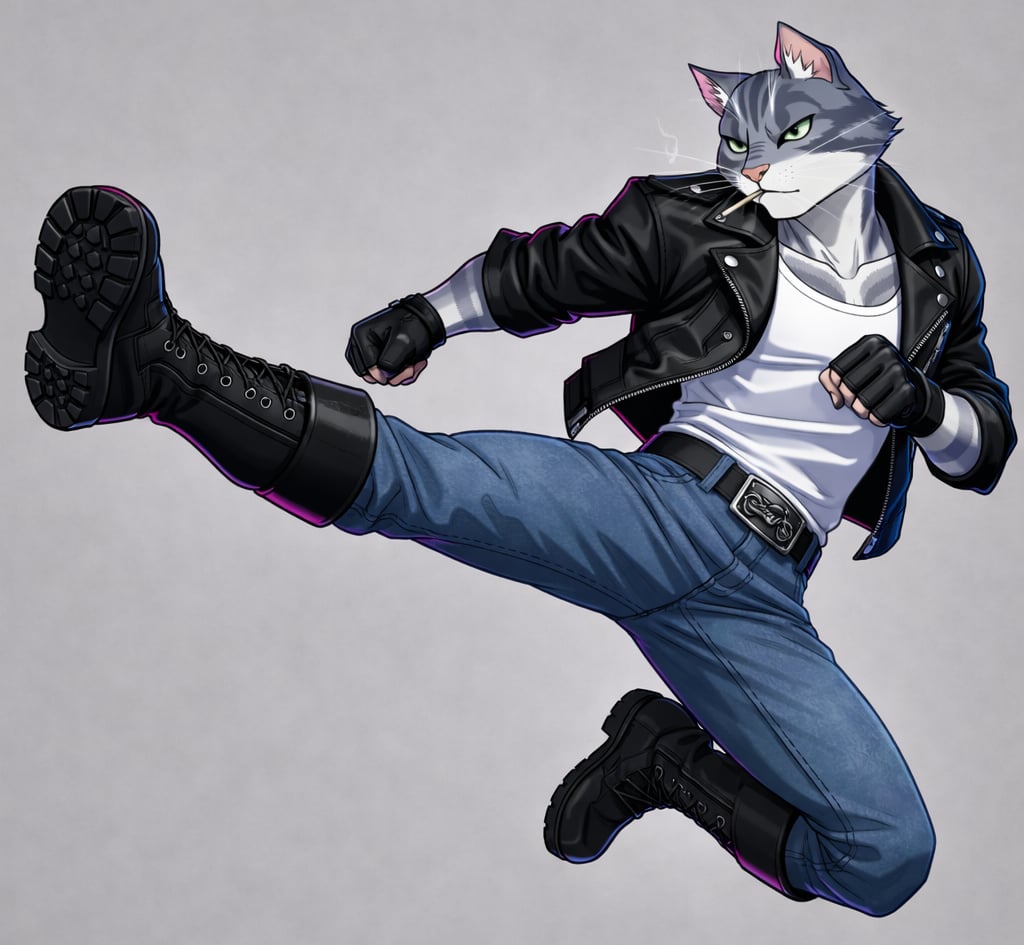
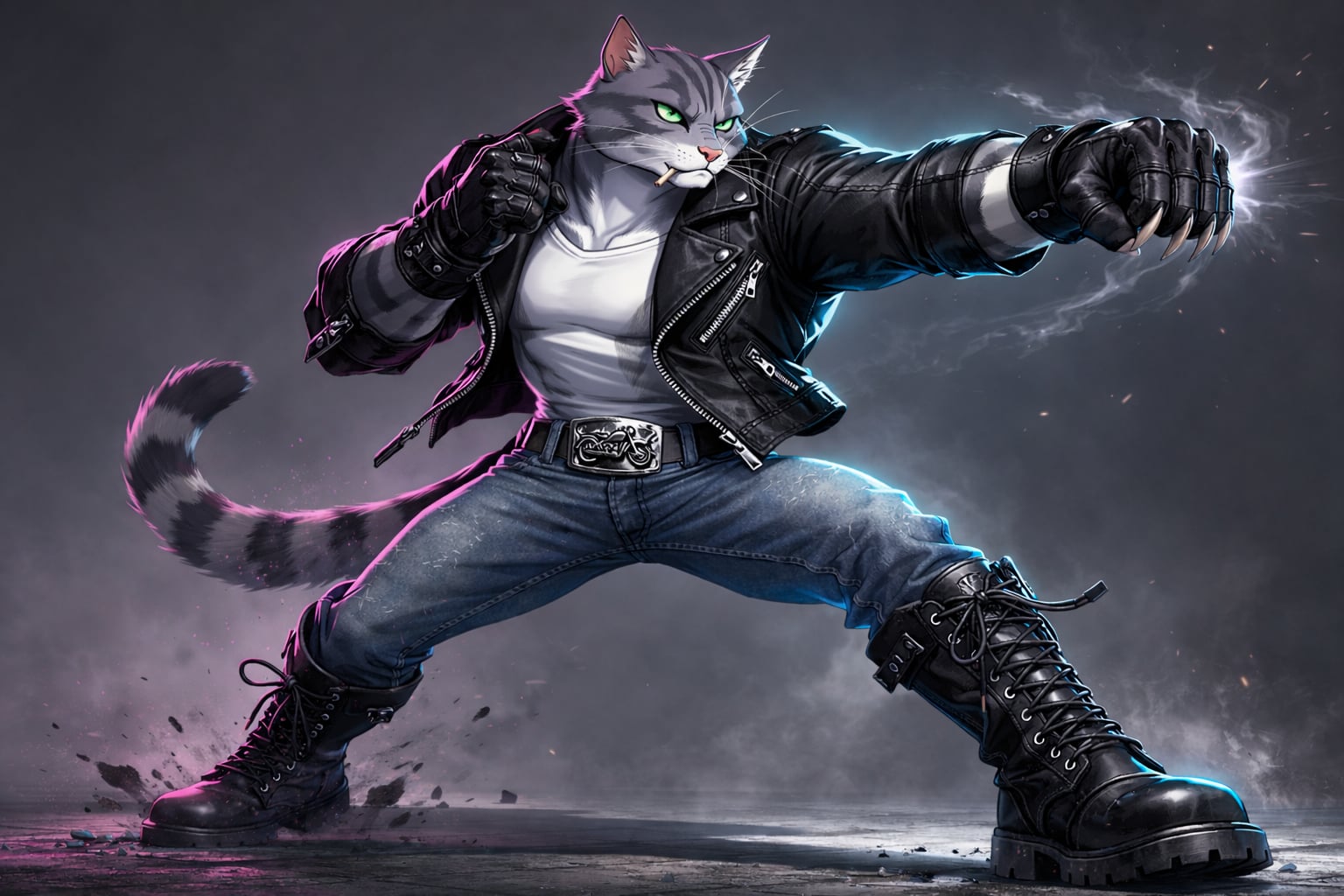
Timmy concept art Timmy concept art Timmy concept art

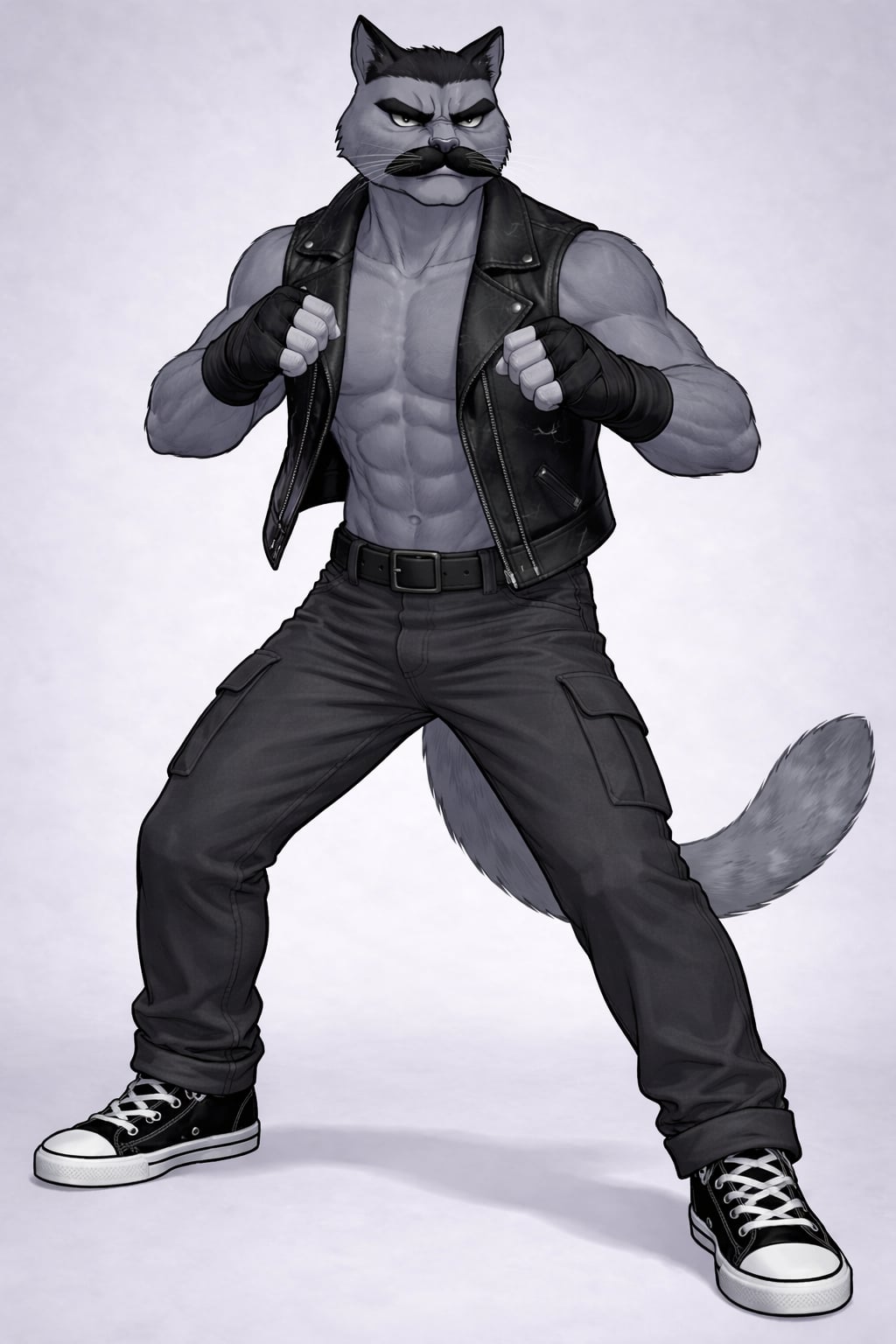
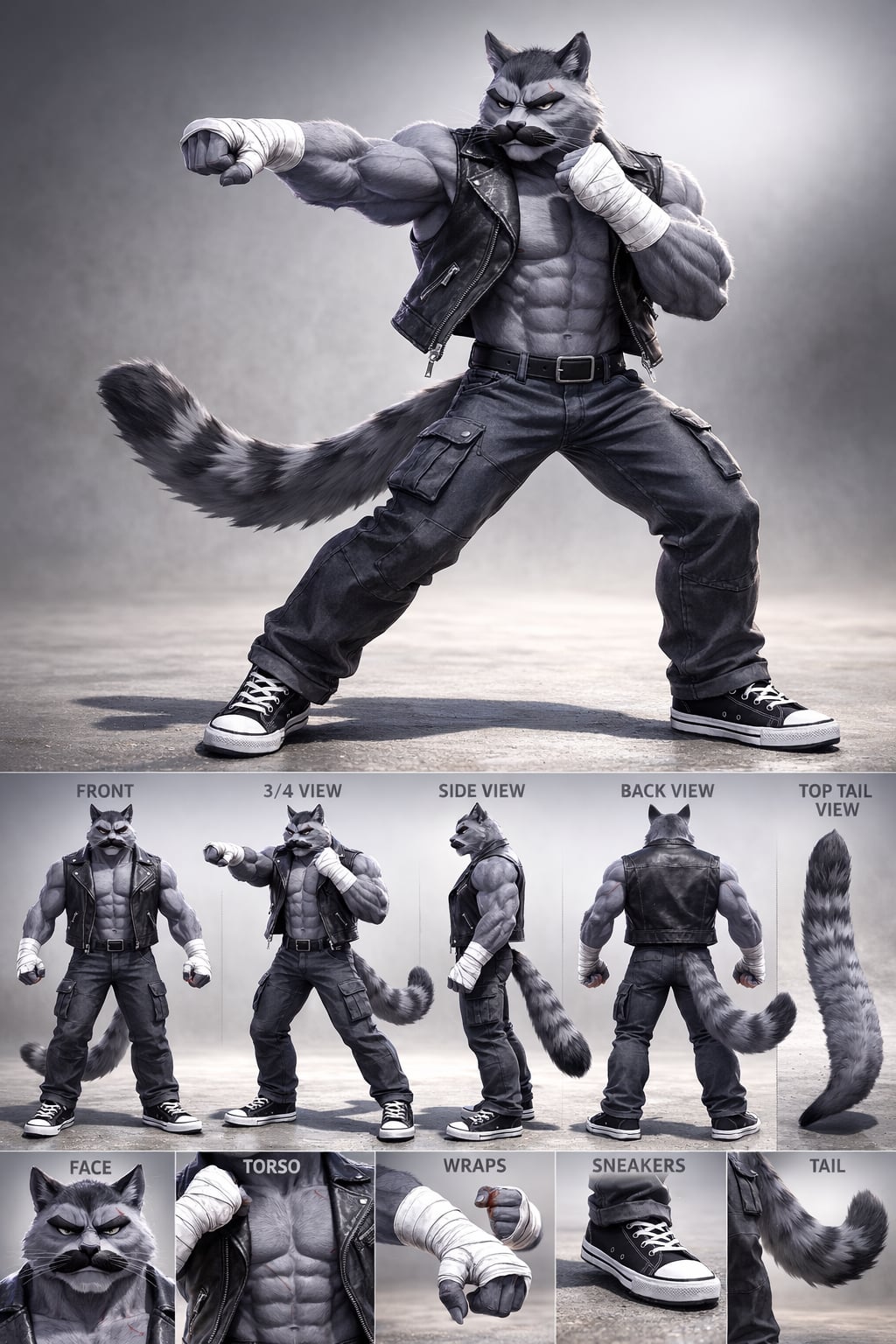
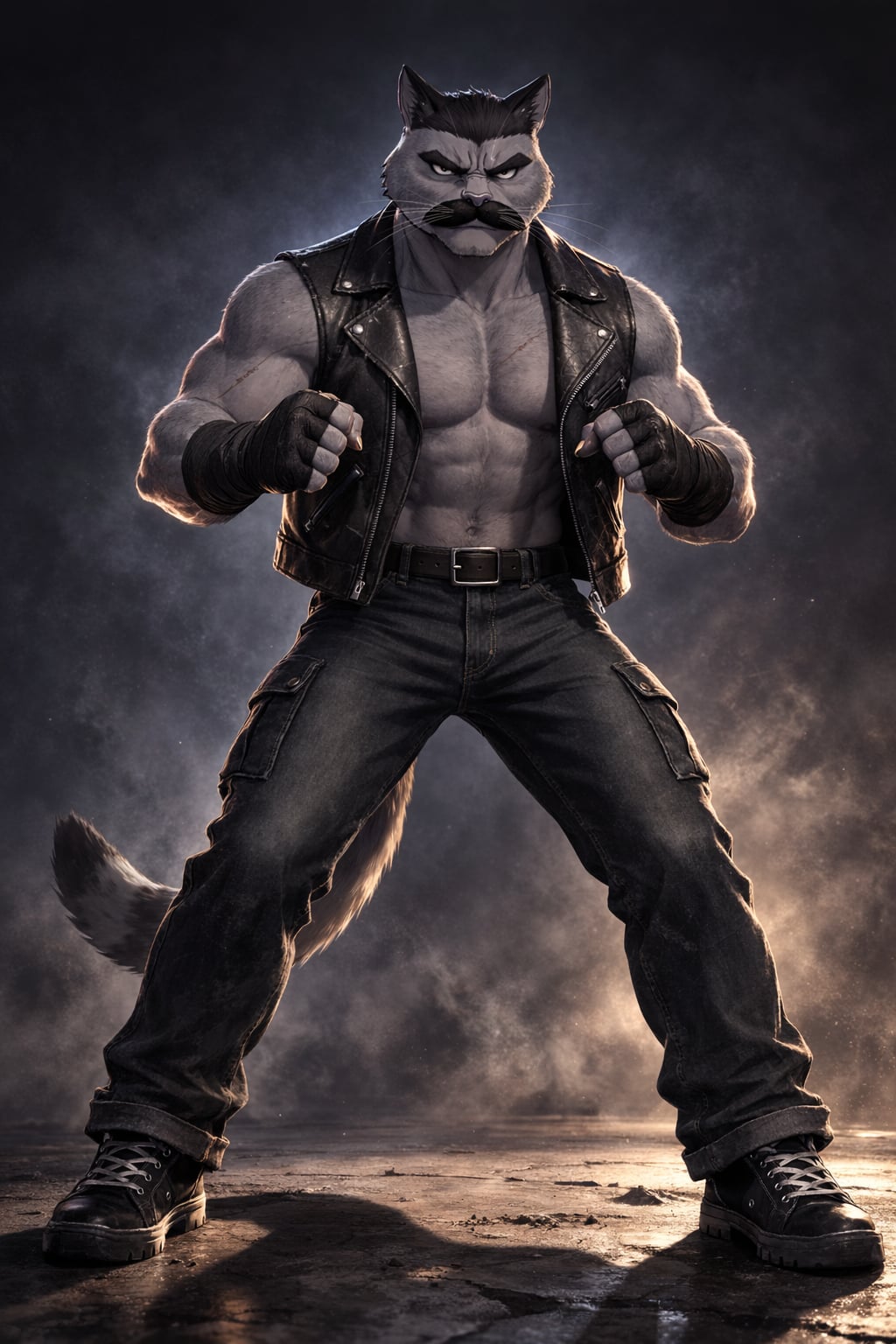
THE BRUISER — Dan


Core Identity

Name: Dan
Role: Bruiser
Archetype: Heavy / Wrestler / Old School Fighter
Occupation: Former National Wrestling Champion
Motto: Be The Beast

Dan is the team’s immovable force — the wall that chaos breaks against.

He is not the fastest.
Not the loudest.
He is the heaviest presence in the room.


Canon Reference

All immutable visual rules are defined here:

This document defines who Dan is, not how he must be drawn.


Who They Are

Before the streets,
there was discipline.

Dan is a former national wrestling champion.
He knows pressure.
He knows leverage.
He knows how to end a struggle without wasted motion.

He did not enter the streets seeking conflict.

He entered them when control collapsed.

In a city where chaos spreads block by block,
Dan becomes the wall that does not move.

He does not posture.
He does not threaten.

He enforces reality.


Narrative Role

Dan represents physical certainty.

When fights get crowded,
when pressure builds,
when space collapses —

Dan steps forward.

He does not escalate conflict.
He ends resistance.

He is the team’s anchor point in chaos.


Archetype

Heavy / Close-Range Dominance

Design philosophy:

  • Control space through presence
  • Break rhythm with weight
  • Win exchanges at close range
  • Force opponents into mistakes

Dan does not chase advantage.

He imposes it.


Personality

Dan speaks rarely.

  • No theatrics
  • No sarcasm
  • No visible ego
  • No emotional volatility

He is experienced.
Grounded.
Unshakable.

Others create motion.
Dan creates consequence.


Presence

Dan carries silent authority.

He feels:

  • Immovable
  • Controlled
  • Physically dominant
  • Economical in motion

He does not perform strength.

He embodies it.


Combat Identity

Dan’s combat style is built on pressure and weight.

Characteristics:

  • Clinch control
  • Throws and takedowns
  • Crushing knees
  • Short-range dominance
  • Body pressure and positional control
  • Slow but devastating impact animations

Every strike should feel like gravity.

Not speed.


Emotional Tone

Dan represents the moment after impact.

The silence when air leaves the room.

The realization that the fight just changed.

He does not rush.

He advances.


Design Intent (High-Level)

Dan should always read as:

  • Old-school street fighter presence
  • Controlled brutality
  • Physical authority
  • Minimal expression, maximum consequence

Detailed visual enforcement is handled exclusively by the Visual Lock document.

Dan concept art Dan concept art Dan concept art

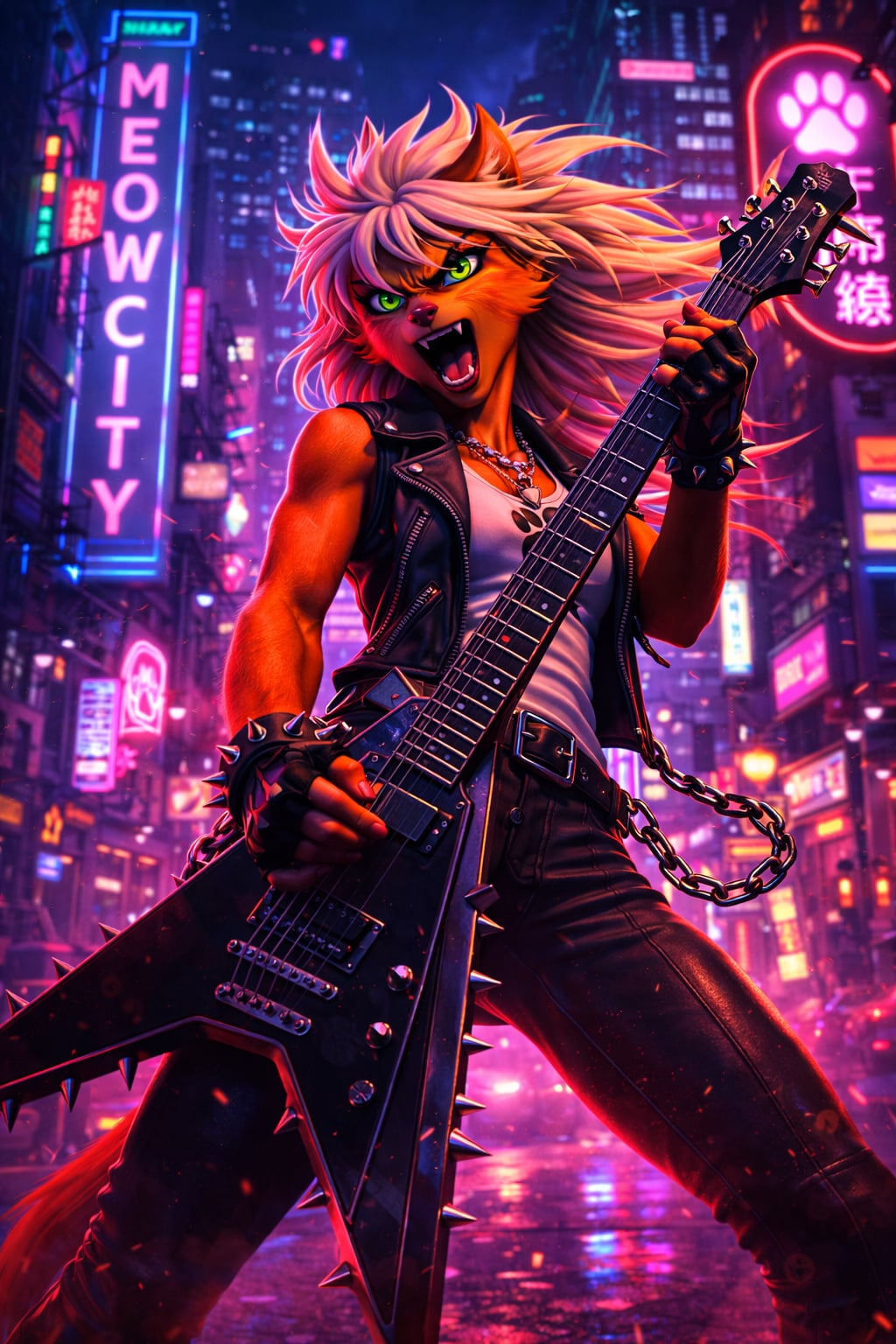
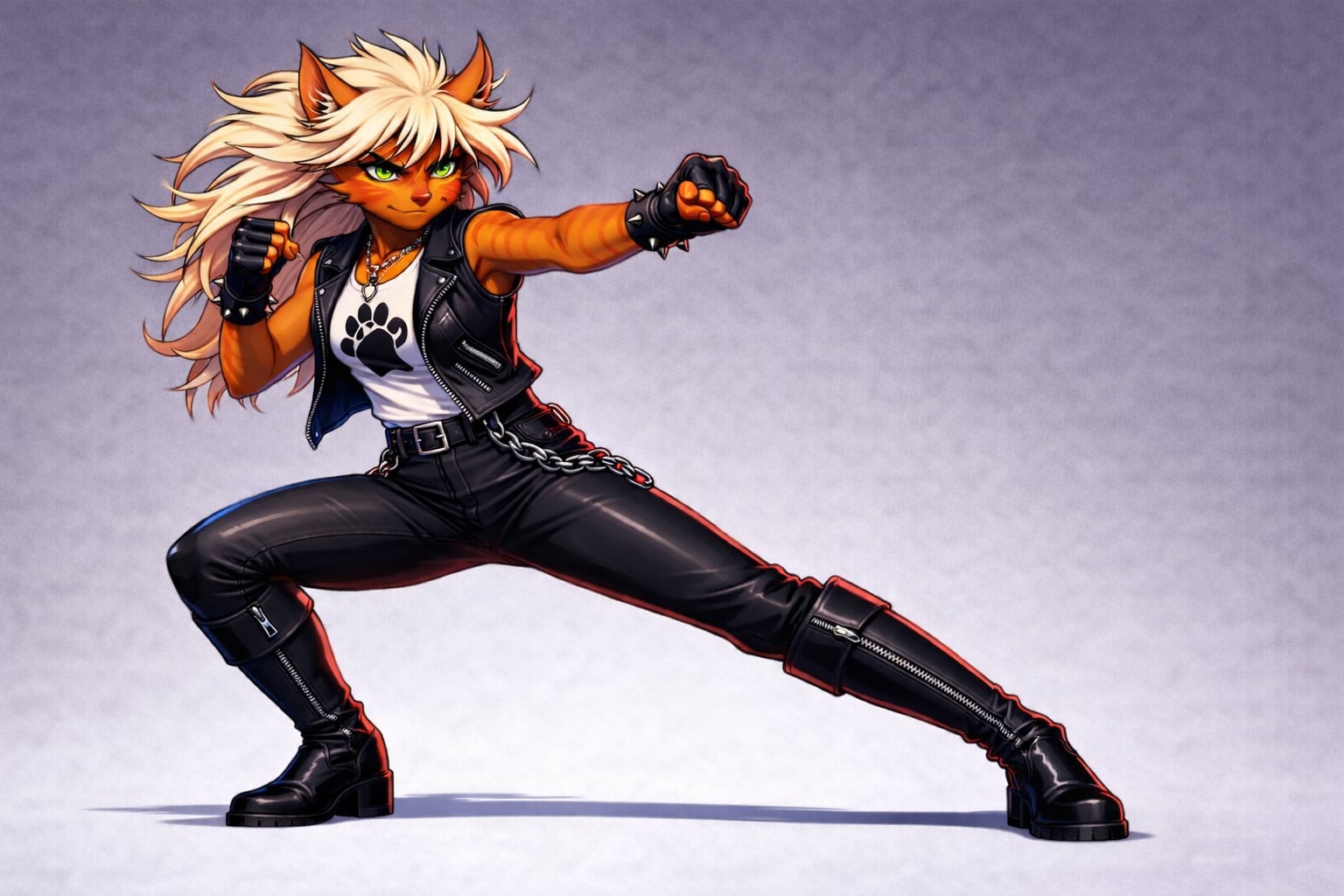
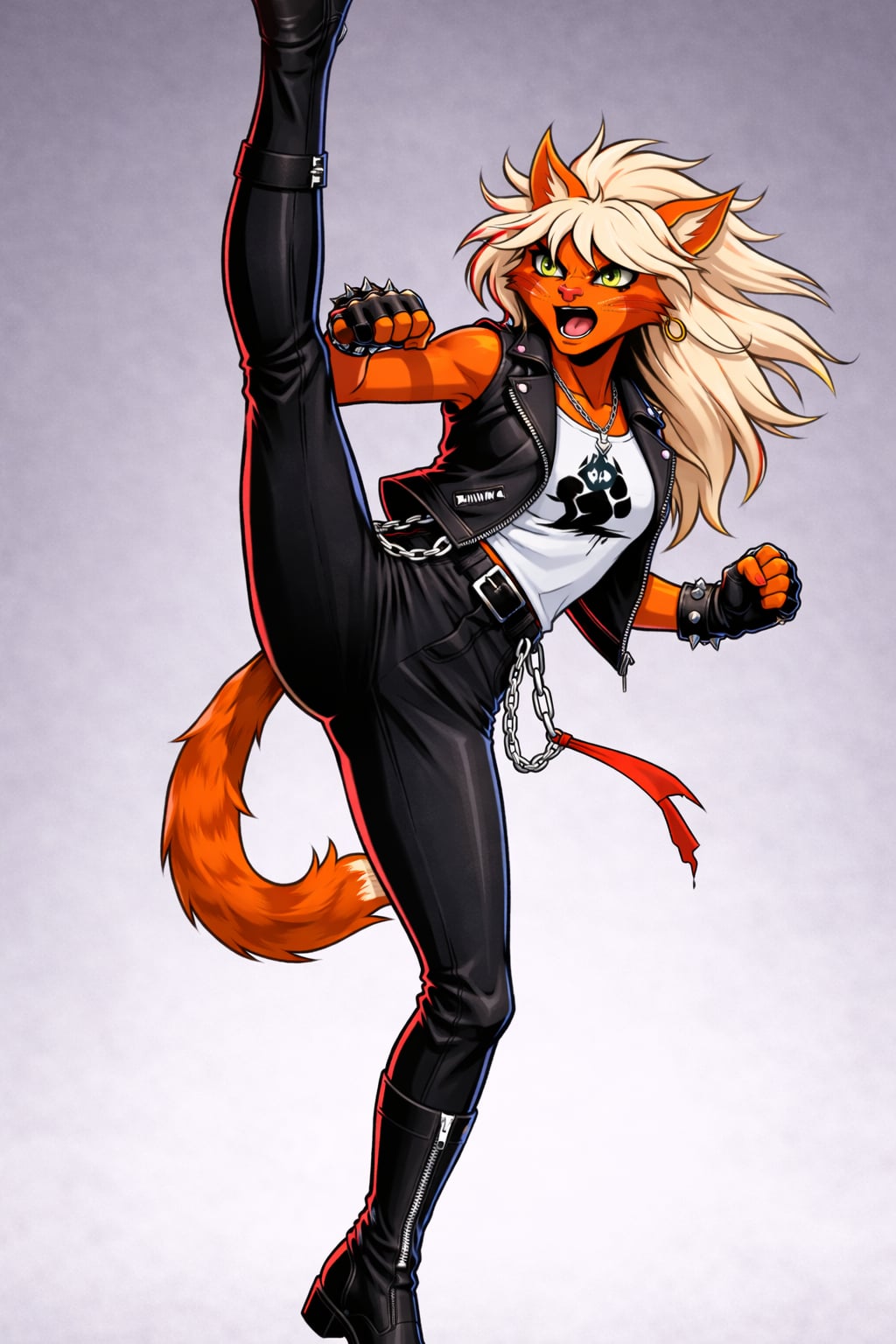
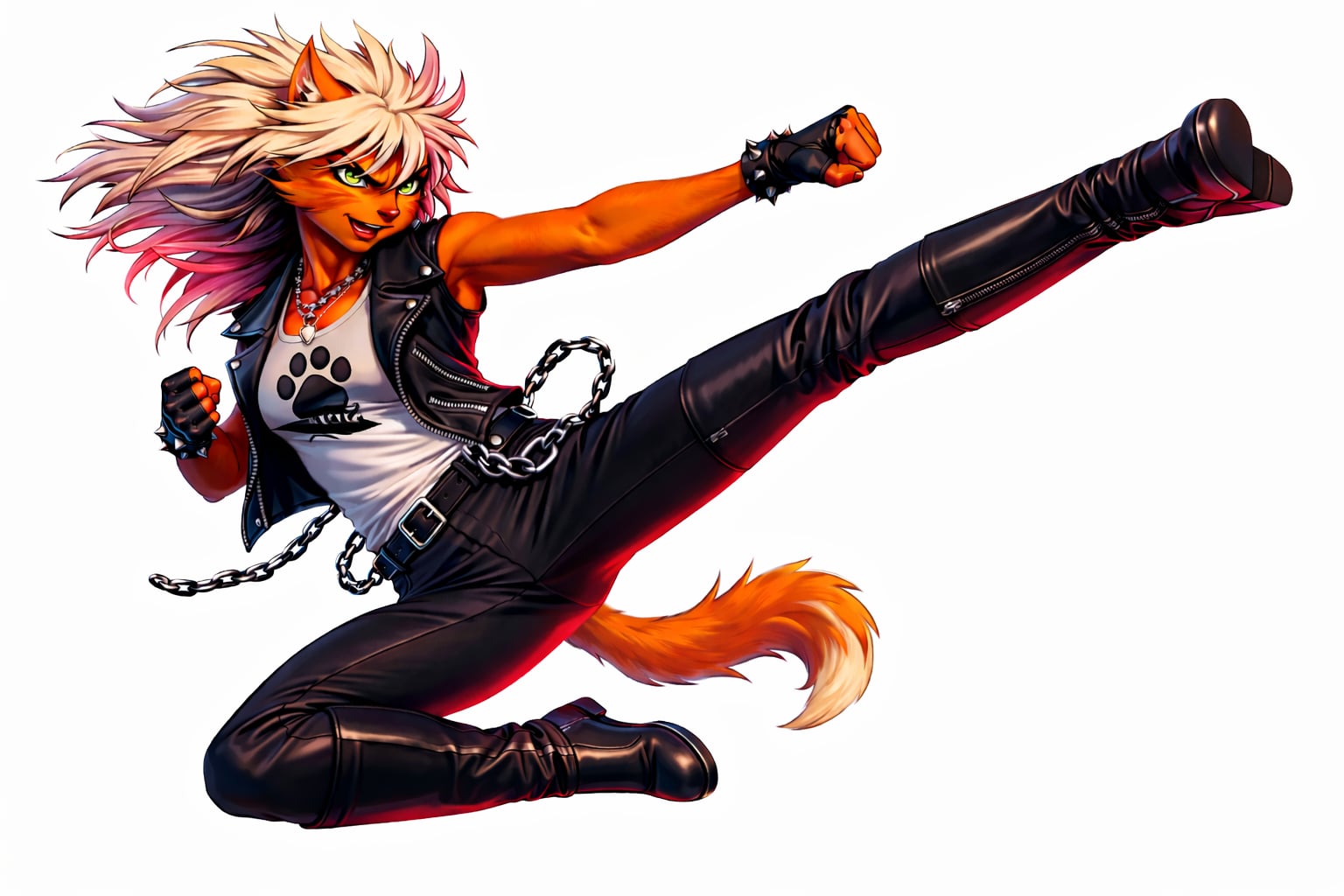
THE BLAZER — Jett


Core Identity

Name: Nova Jett
Role: Blazer
Archetype: Speed / Pressure / Voice of Resistance
Occupation: Underground Rock Vocalist / Voice of Resistance
Motto: Claws Out

Jett is ignition.

She does not wait for momentum.
She creates it.

She does not follow energy.
She amplifies it.

If Leader controls rhythm
and Bruiser enforces weight —
Blazer turns sparks into fire.


Canon Reference

All immutable visual rules are defined here:

This document defines who Jett is, not how she must be drawn.


Who They Are

Before the streets,
there was a stage.

Jett is a rock vocalist of Meowami City.
Her voice filled underground clubs.
Her lyrics carried coded defiance.
Her name traveled faster than police sirens.

When corruption tightened its grip,
she did not retreat into music.

She weaponized it.

Her concerts became gathering points.
Her choruses became signals.
Her presence became ignition.

She did not set out to lead a resistance.

She became its pulse.


Narrative Role

Jett represents escalation.

She transforms hesitation into action.
She transforms tension into motion.
She transforms motion into pressure.

In the team dynamic:

  • Leader stabilizes
  • Bruiser anchors
  • Rogue corrects
  • Blazer advances

She is not reckless.

She is fearless.

And fearlessness is contagious.


Archetype

Speed / Pressure Fighter

Design philosophy:

  • Forward momentum as identity
  • Tempo as a weapon
  • Relentless advance
  • Strike chains that build rhythm
  • Aggression through movement

Jett grows stronger while pushing forward.

Stopping is not her instinct.

Acceleration is.


Personality

Jett is expressive and unapologetic.

  • High energy
  • Direct and blunt
  • Charismatic without vanity
  • Fierce without hysteria
  • Emotionally loud — strategically aware

She enjoys the spotlight.
But she earns it.

Her presence is not performance.

It is declaration.


Presence

Blazer feels explosive.

She is:

  • Electrified
  • Forward-leaning
  • Kinetic
  • Uncontained
  • Loud without losing control

Where Dan is gravity,
Jett is ignition.

Where Knoxx waits,
Jett moves.

She does not calm storms.

She becomes them.


Combat Identity

Her combat style mirrors her stage presence.

Characteristics:

  • High mobility
  • Fast strike chains
  • Aerial pressure
  • Rhythm-driven offense
  • Momentum amplification
  • Relentless forward push

Her strength is not raw power.

It is tempo.

Every fight feels like a guitar solo —
fast, aggressive, escalating.


Emotional Tone

Blazer represents the moment during impact.

Flash.
Heat.
Noise.
Motion.

She is not the calm before the storm.

She is the storm with a microphone in one hand
and a clenched fist in the other.


Design Intent (High-Level)

Blazer must always read as:

  • 80s metal energy without parody
  • A rock frontwoman turned street catalyst
  • Fierce and intense, not comedic
  • Speed embodied
  • Controlled aggression, not chaos
  • The audible voice of resistance

Detailed visual enforcement is handled exclusively by the Visual Lock document.

Jett concept art Jett concept art Jett concept art

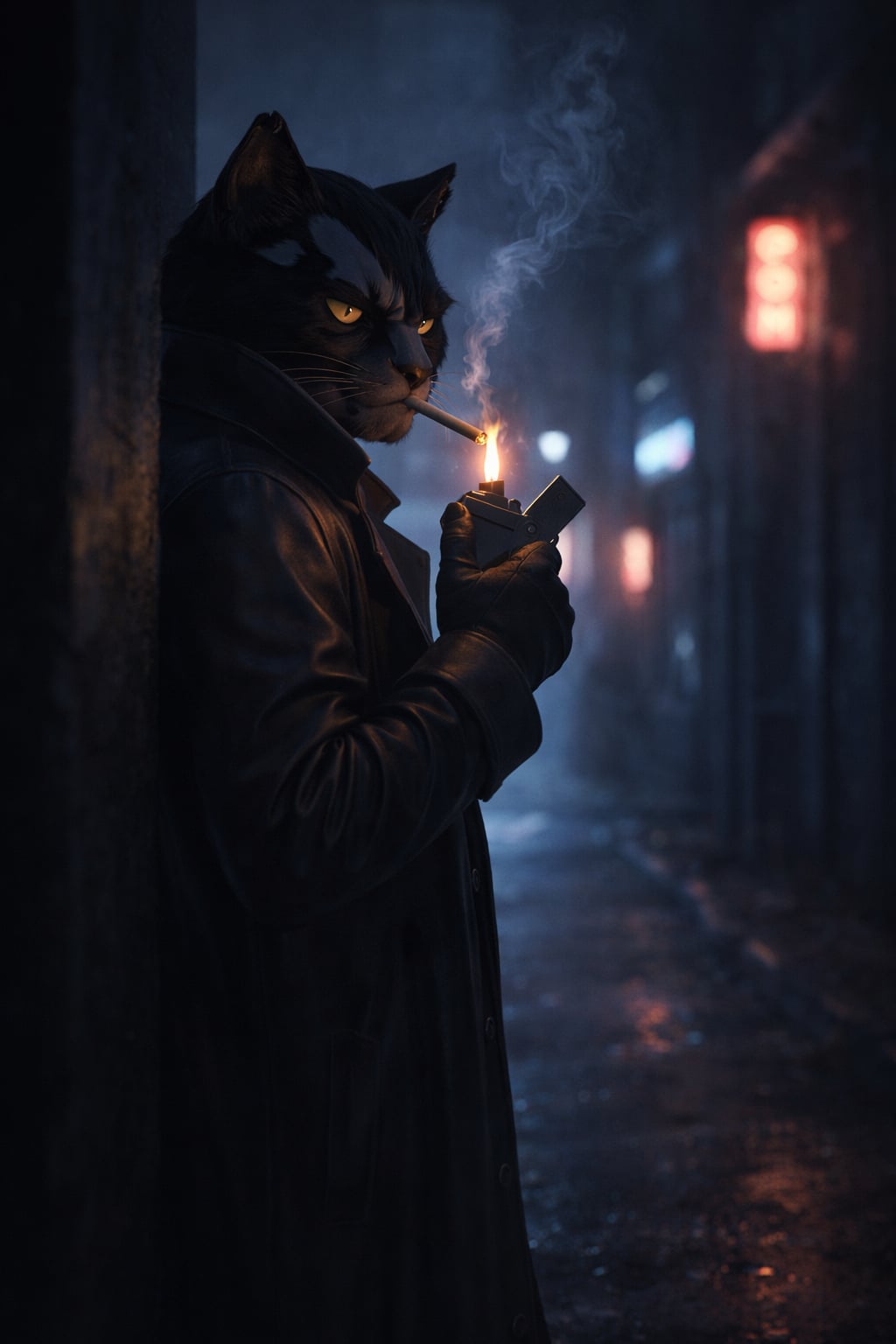
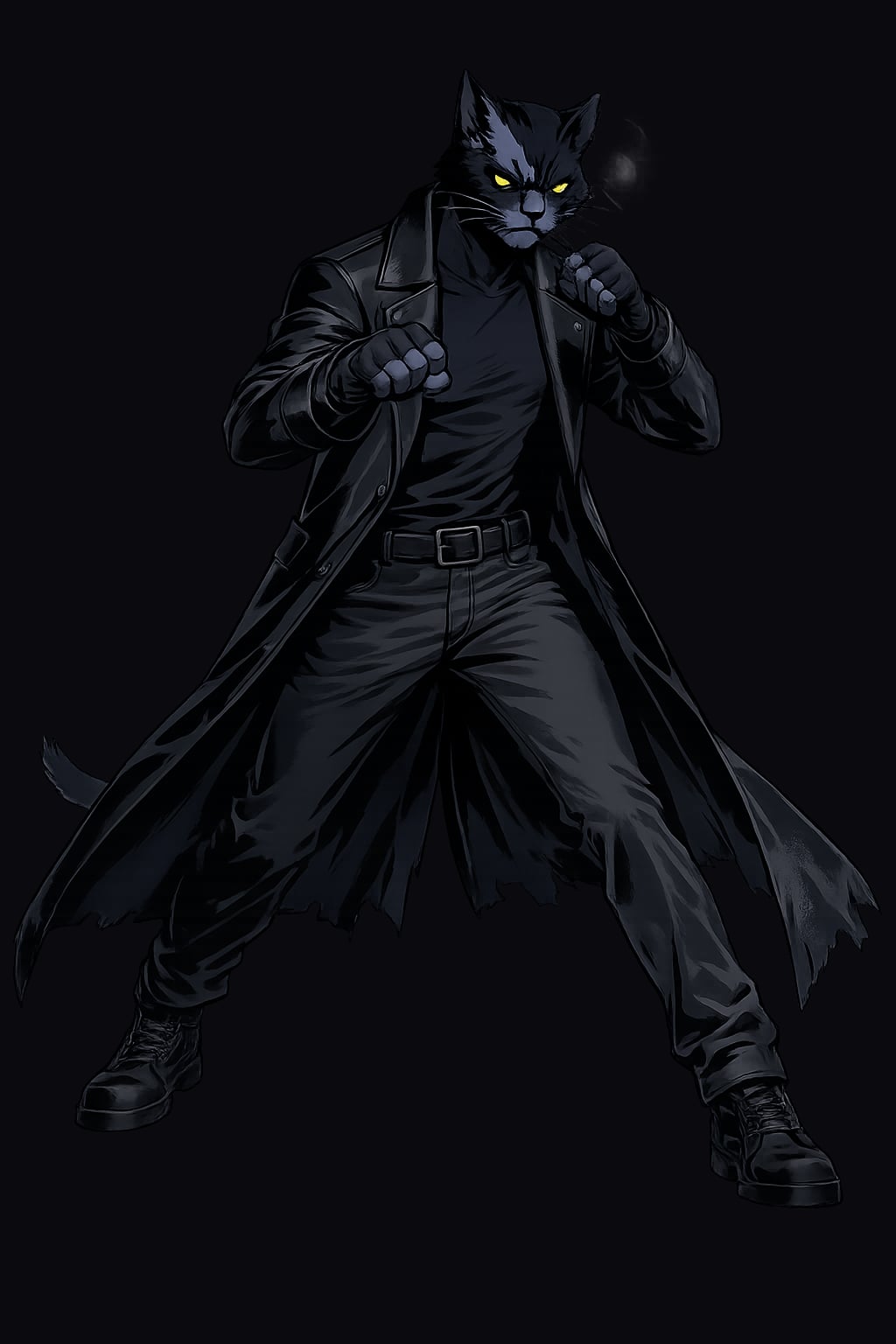
THE ROGUE — Knoxx


Core Identity

Name: Knoxx
Role: Rogue
Archetype: Counter / Precision / Timing
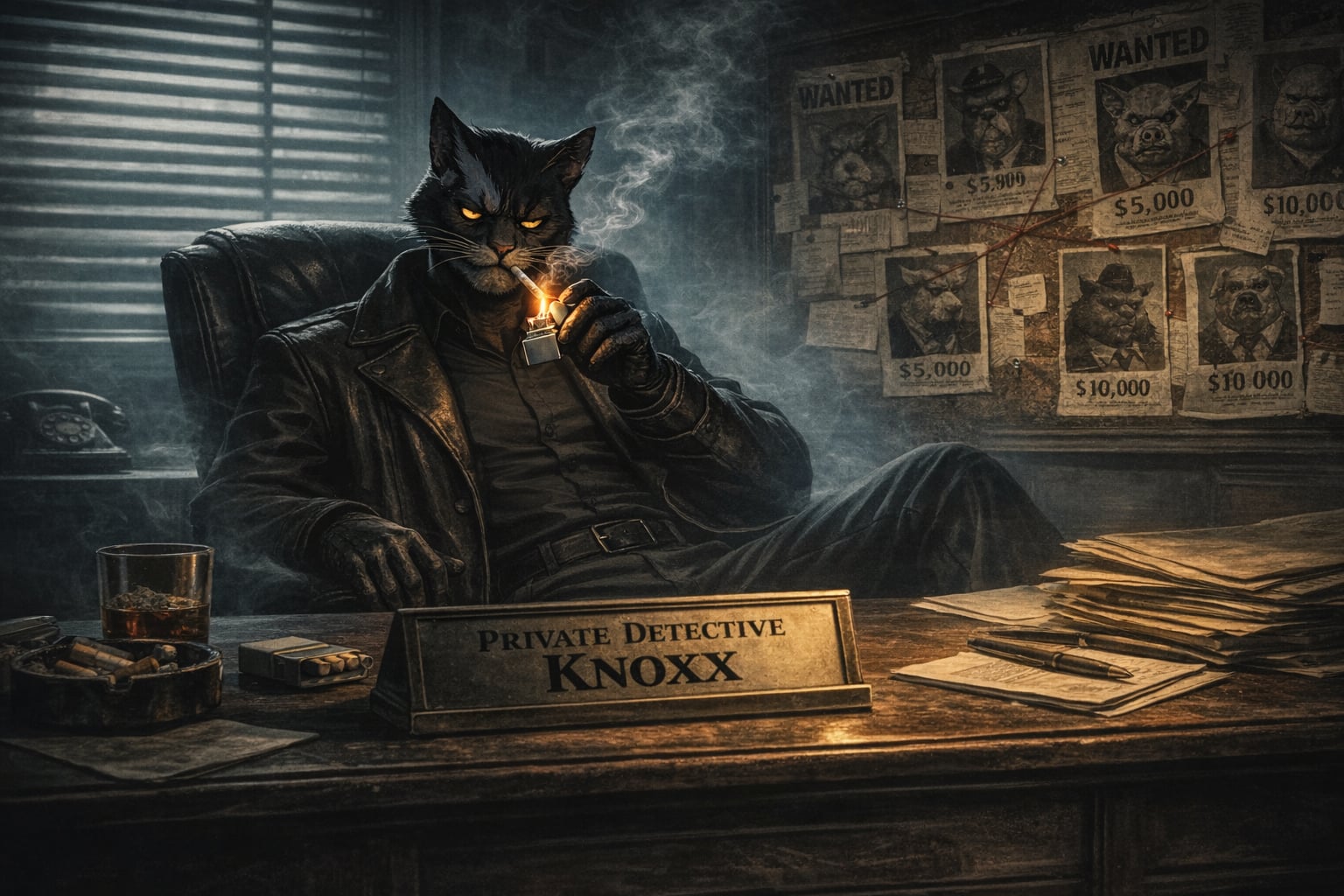
Occupation: Private Detective
Motto: Do you feel lucky?

Knoxx is restraint.

He does not rush into fights.
He lets fights reveal themselves.

Where Blazer ignites
and Bruiser presses —
Rogue waits.


Canon Reference

All immutable visual rules are defined here:

This document defines who Knoxx is, not how he must be drawn.


Who They Are

Knoxx is a licensed private detective in Meowami City.

He works the cases the Hounds ignore.
He digs into corruption the Pigs conceal.
He tracks movements the Rats think are invisible.

He knows the city from rooftops to docks.
From neon clubs to dead-end alleys.

He does not trust institutions.

He trusts patterns.

He does not chase noise.

He studies it —
and waits for the mistake.


Narrative Role

Knoxx represents experience.

He is the oldest of the four.
He has seen escalation.
He has survived it.

He does not dominate space.
He dominates timing.

He allows opponents to overcommit —
and then he corrects them.

Permanently.


Archetype

Counter / Precision Fighter

Design philosophy:

  • Punish-first philosophy
  • Enhanced parry timing
  • Controlled spacing
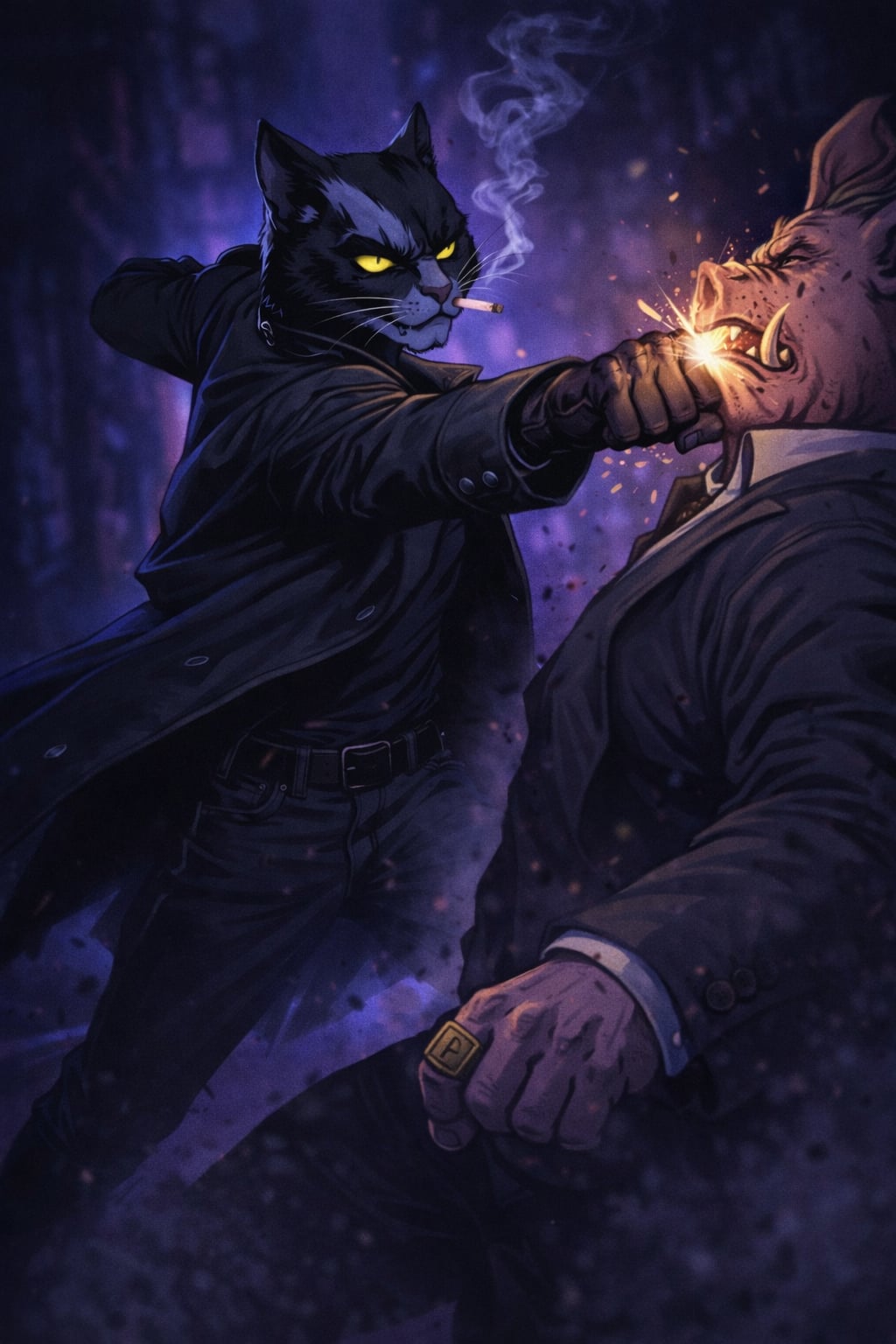
  • Single decisive impact

Knoxx does not trade blows.

He ends exchanges.


Personality

Knoxx is dry, controlled, and analytical.

  • Surgical sarcasm
  • Rarely impressed
  • Speaks quietly
  • Observes before acting
  • Occasionally undercuts Leader — never publicly

He does not seek attention.

He seeks efficiency.


Presence

Rogue feels still.

He is:

  • Vertical
  • Balanced
  • Minimal in motion
  • Always measuring distance

He looks at opponents
like they are already a solved equation.


Combat Identity

Knoxx thrives on precision.

Characteristics:

  • Enhanced parry window
  • Focus-based counter system
  • Damage spikes after perfect timing
  • Strong single-hit impact
  • Short slow-motion moment on perfect counter
  • Calm idle before explosive response

He does not build momentum.

He builds inevitability.


Focus Mechanic

Focus accumulates when:

  • Not attacking
  • Maintaining defensive stance
  • Successfully blocking

Full Focus enables:

  • Guaranteed critical counter
  • Stronger knockback
  • Brief cinematic slowdown

Focus rewards patience.


Emotional Tone

Rogue represents the moment after a mistake.

Silence.
Correction.
Finality.

He does not rage.

He calculates.


Design Intent (High-Level)

Rogue must always read as:

  • Veteran presence
  • Controlled menace
  • Precision over aggression
  • Discipline over drama
  • 80s street anti-hero without cliché
  • Noir private detective energy

Detailed visual enforcement is handled exclusively by the Visual Lock document.
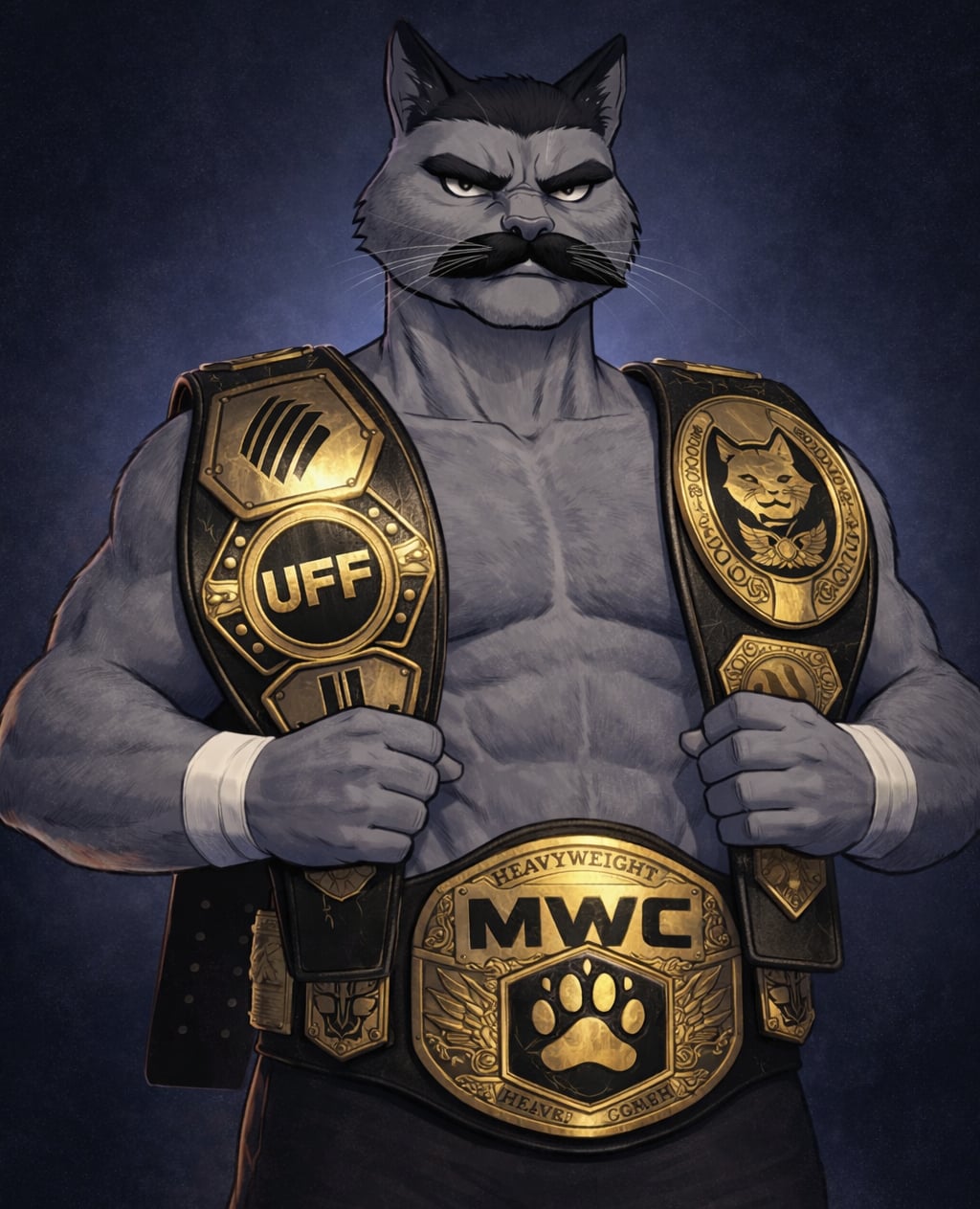

Knoxx concept art Knoxx concept art Knoxx concept art

Gallery